
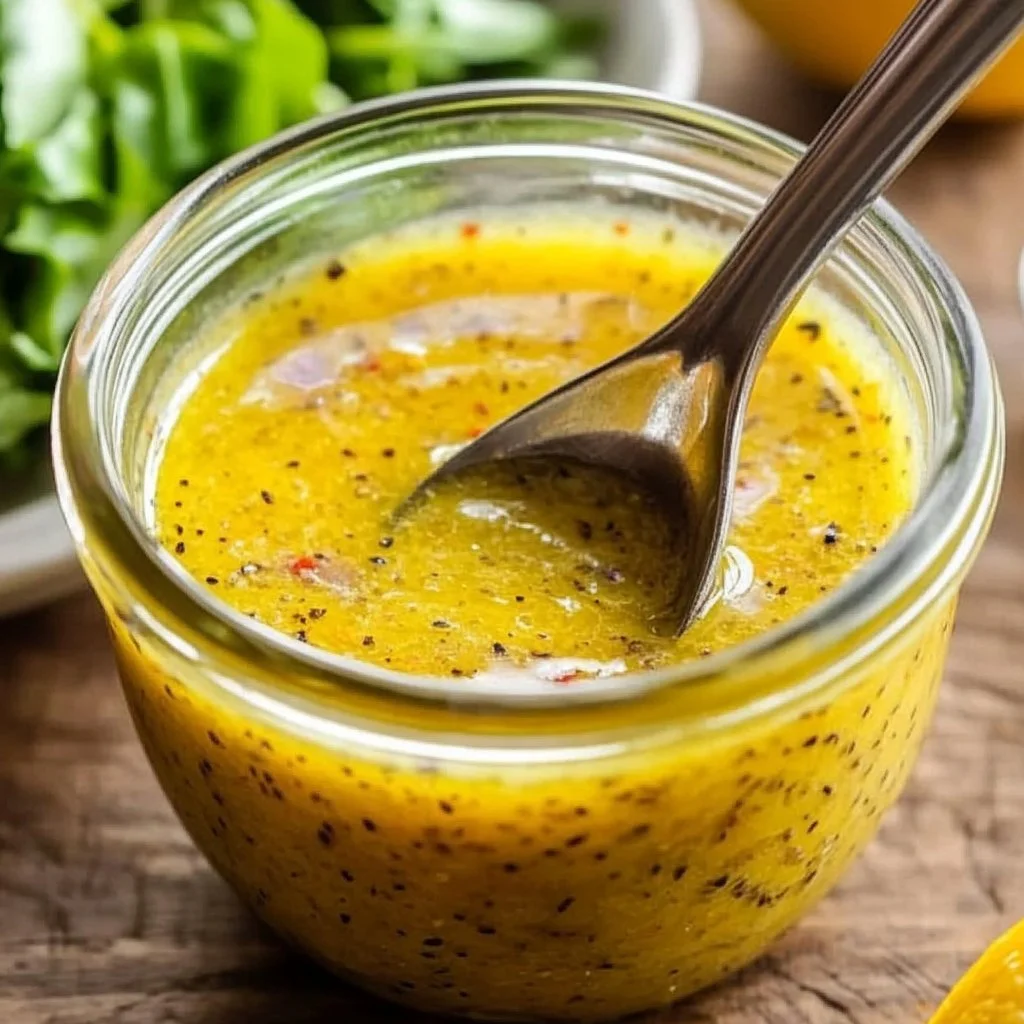
I make this lemon vinaigrette on repeat when I want something bright, fast, and totally adaptable. It’s a simple emulsified dressing of lemon juice, olive oil, Dijon, and garlic that lifts everything from a plain green salad to roasted vegetables or a piece of pan-seared fish. I often spoon it over grilled salmon, especially when serving my creamy lemon butter salmon, but it’s equally good as a marinade or a quick sauce.
Why you’ll love this dish
This vinaigrette is one of those kitchen workhorses: it’s fast, requires pantry staples, and delivers a bright, balanced flavor. It’s perfect for weeknight salads, light lunches, or when you need a last-minute sauce for seafood or vegetables. Kids usually respond to the mild sweetness if you add a touch of honey. Plus, it’s easy to tweak — more lemon for brightness, more oil for a softer finish, or extra mustard to help the dressing hold together when tossed with hearty greens.
Preparing Lemon Vinaigrette Dressing
Step-by-step overview: you whisk the acid, mustard, and garlic first, then slowly drizzle in oil to create an emulsion. Taste and adjust sweetness and seasoning, then fold in herbs if you like. The whole process takes about five minutes and no special equipment beyond a bowl and a whisk.
Key ingredients
- 1/4 cup lemon juice (about 1 large lemon; use fresh for best flavor)
- 1/2 cup olive oil (extra virgin gives grassy notes; use mild olive oil if you prefer less bitterness)
- 1 teaspoon Dijon mustard (helps emulsify and adds tang)
- 1 clove garlic, minced (or 1/2 teaspoon garlic paste)
- 1 teaspoon honey or maple syrup, optional (balances acidity)
- Salt and pepper to taste
- Fresh herbs such as parsley or basil, optional (finely chopped)
Notes and substitutions: swap lemon for lime if you want a sharper, more tropical profile. If you do not have Dijon, use whole-grain mustard or a pinch of dry mustard and whisk well. For a creamier result, stir in a tablespoon of Greek yogurt at the end.
How to prepare it
- Add the lemon juice, Dijon mustard, and minced garlic to a medium bowl. Whisk until the mustard is completely blended.
- Slowly pour in the olive oil in a steady stream while whisking vigorously. Keep whisking until the dressing is smooth and slightly thickened.
- If you want a touch of sweetness, whisk in the honey or maple syrup now.
- Season to taste with salt and freshly ground black pepper. Start with a pinch of salt and a few grinds of pepper, then adjust.
- Fold in chopped fresh herbs if using. They add color and a fresh finish.
- Drizzle over salads, toss with grilled vegetables, or use as a bright sauce for fish.
- Store leftover dressing in a sealed container in the refrigerator.
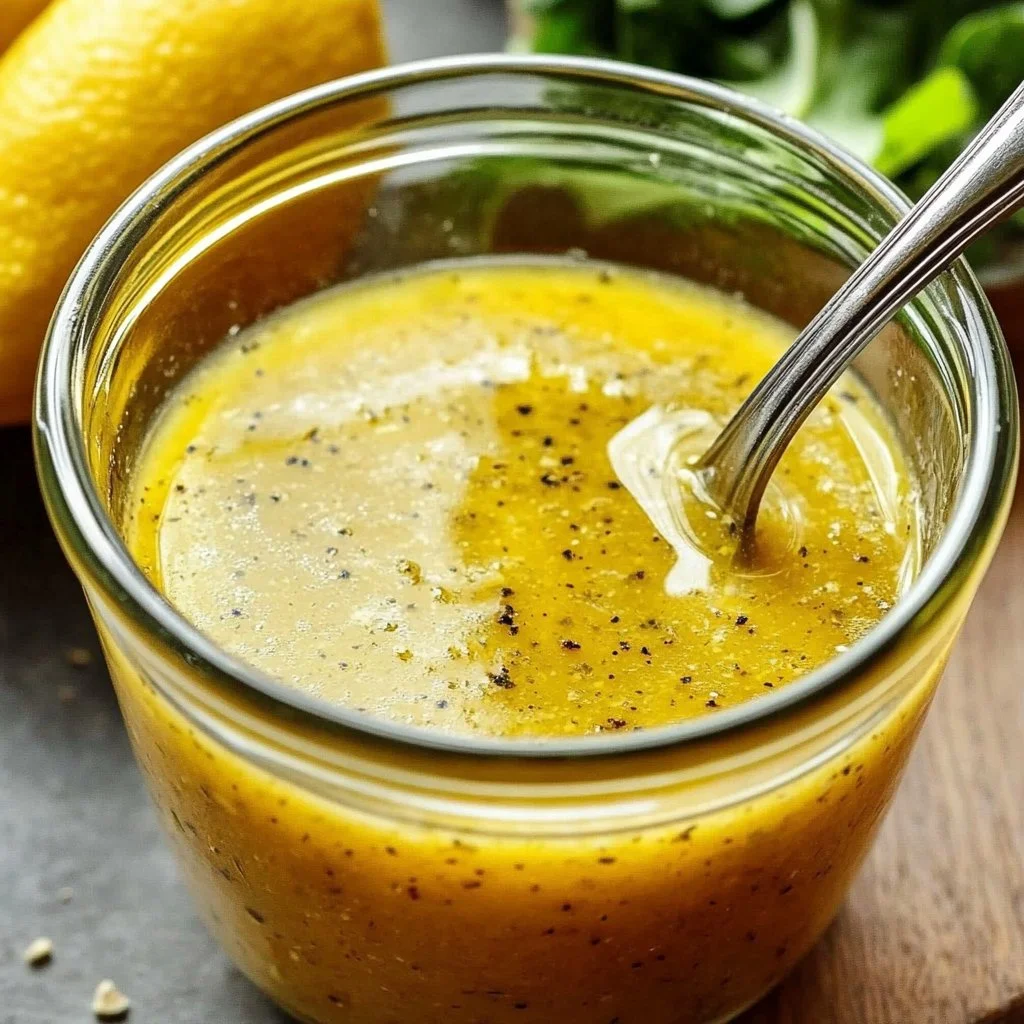
Directions to follow
Use a small bowl or a jar with a tight lid for easy mixing. If using a jar, add all ingredients, tighten the lid, and shake vigorously until combined. For finer texture, let the dressing sit a few minutes to allow flavors to marry, then taste and re-season. If the dressing separates after resting, whisk or shake again before serving.
Best ways to enjoy it
This vinaigrette pairs beautifully with peppery arugula, romaine, or mixed baby greens. Try it with:
- A simple chopped salad of cucumber, cherry tomatoes, and red onion.
- Warm roasted vegetables like asparagus or Brussel sprouts to brighten them up.
- Grilled or seared fish as a finishing drizzle.
- Tossed with cooked pasta and vegetables as a light pasta salad. For a heartier meal, combine with sliced chicken or toss it into a warm pasta bowl with your favorite protein, such as the cowboy-style pasta in the cowboy butter lemon bowtie chicken recipe.
How to store & freeze
Keep the vinaigrette in a sealed jar in the refrigerator for up to one week. Olive oil may thicken or cloud when cold; bring the jar to room temperature for a few minutes and shake or whisk before using. Freezing is possible in ice cube trays for up to two months, but texture and flavor may change slightly after thawing. Always use clean utensils when handling the dressing and discard if you notice off smells, discoloration, or mold.
Pro chef tips
- Emulsify properly: whisk the mustard into the acid first, then add the oil slowly. This creates a stable emulsion that clings to greens.
- Warm garlic slightly in the lemon juice for 30 seconds before mixing to mellow the raw bite if you prefer a subtler garlic flavor.
- Taste as you go: acidity, oil, and salt must be balanced. If it tastes too sharp, add a small splash of oil or a little honey. If it’s too flat, add a bit more lemon or mustard.
- Use a neutral oil if the olive flavor is too strong for delicate salads. Avocado oil is a great alternative.
- Make ahead: vinaigrette flavors develop over an hour, so if you can, make it ahead and refrigerate for an hour before serving.
Flavor swaps
- Add shallot instead of garlic for a milder, sweeter onion note.
- Swap lemon for lime or grapefruit for a citrus variation.
- Stir in a teaspoon of capers or a splash of pickle brine for a briny lift.
- For a creamy version, blend the dressing with a tablespoon of plain yogurt or mayonnaise.
- Add red pepper flakes or a pinch of smoked paprika for heat and smokiness.
Helpful answers
How long does this dressing keep in the refrigerator?
Stored in a sealed container, it will keep for about one week. Olive oil may solidify when cold; let it warm slightly and shake before using. Discard if you detect off smells or visible signs of spoilage.
Can I use bottled lemon juice instead of fresh lemons?
Fresh lemon juice gives the brightest flavor, but bottled lemon juice can work in a pinch. Expect a slightly different acid profile; you may need to adjust seasoning to taste.
What if my dressing separates?
Separation is normal. Shake or whisk vigorously to recombine. For a more stable emulsion, add an extra 1/4 teaspoon of Dijon mustard or blend the dressing briefly with an immersion blender.
Is this dressing suitable for special diets?
It’s naturally gluten free and can fit into low-carb and most vegetarian diets. Omit honey or use a sugar-free sweetener to make it keto friendly.
Can I double or halve the recipe easily?
Yes. Emulsification works best when you add the oil slowly relative to acid, so scale the proportions evenly and whisk thoroughly.
PrintLemon Vinaigrette Dressing
A bright, fast, and adaptable lemon vinaigrette dressing perfect for salads, grilled vegetables, or fish.
- Prep Time: 5 minutes
- Cook Time: 0 minutes
- Total Time: 5 minutes
- Yield: 1 cup 1x
- Category: Condiment
- Method: Whisking
- Cuisine: American
- Diet: Vegetarian
Ingredients
- 1/4 cup lemon juice (about 1 large lemon)
- 1/2 cup olive oil
- 1 teaspoon Dijon mustard
- 1 clove garlic, minced
- 1 teaspoon honey or maple syrup, optional
- Salt and pepper to taste
- Fresh herbs such as parsley or basil, optional
Instructions
- Add the lemon juice, Dijon mustard, and minced garlic to a medium bowl. Whisk until the mustard is completely blended.
- Slowly pour in the olive oil in a steady stream while whisking vigorously until the dressing is smooth and slightly thickened.
- If you want a touch of sweetness, whisk in the honey or maple syrup now.
- Season to taste with salt and freshly ground black pepper.
- Fold in chopped fresh herbs if using.
- Drizzle over salads, toss with grilled vegetables, or use as a sauce for fish.
- Store leftover dressing in a sealed container in the refrigerator.
Notes
Substitute lime for lemon for a tropical flavor. For a creamier dressing, stir in Greek yogurt at the end.
Nutrition
- Serving Size: 2 tablespoons
- Calories: 135
- Sugar: 1g
- Sodium: 50mg
- Fat: 14g
- Saturated Fat: 2g
- Unsaturated Fat: 12g
- Trans Fat: 0g
- Carbohydrates: 3g
- Fiber: 0g
- Protein: 0g
- Cholesterol: 0mg