
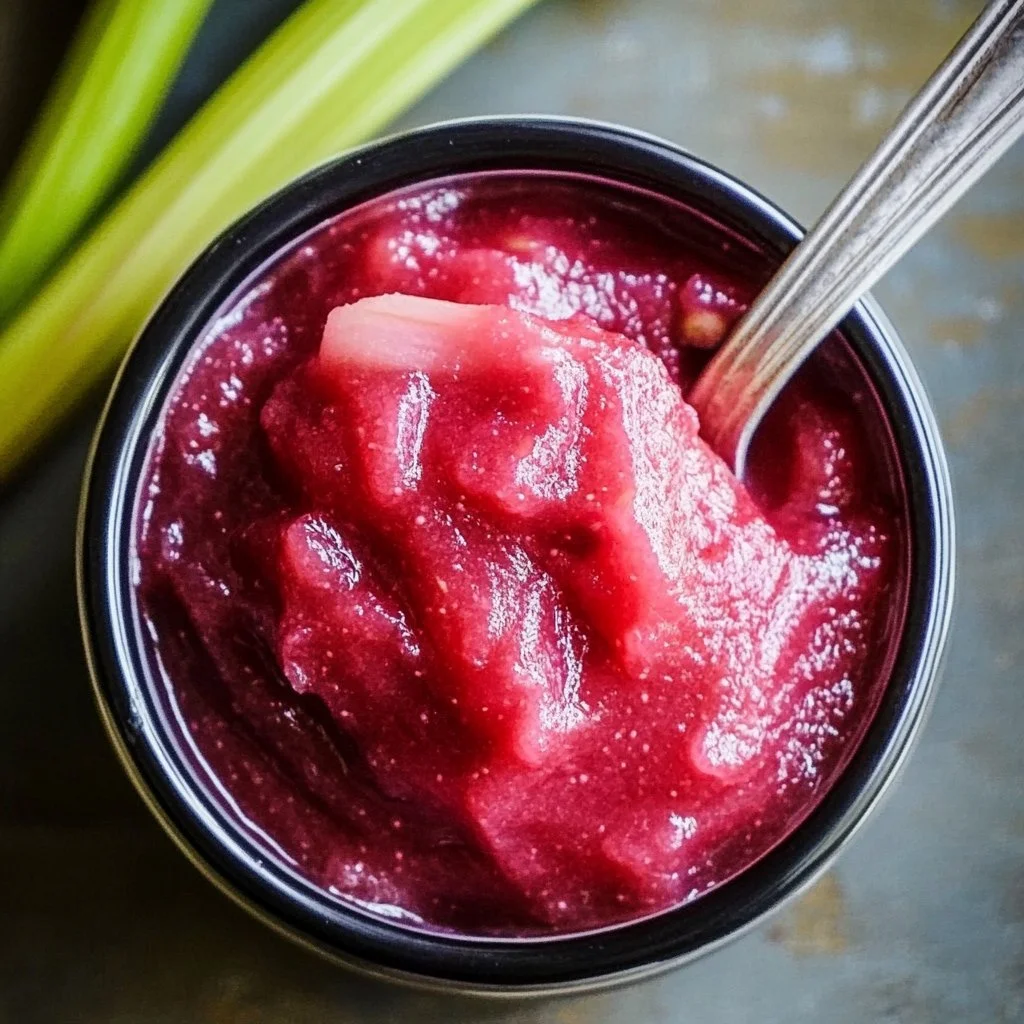
I remember the first time I cooked rhubarb down into a silky spread: the kitchen smelled bright and tart, and a simple slice of toast felt suddenly special. Simple Rhubarb Butter is exactly that—a small-ingredient spread made by simmering fresh rhubarb with sugar and a splash of lemon until it’s thick and smooth, then pureeing it into a silky, spreadable butter. People make it in spring when rhubarb is at its best, for quick homemade gifts, easy brunch additions, or to bring a fresh-tart lift to baked goods and yogurt. If you enjoy concentrated butter-style toppings for cake and pastries, this kind of fruit butter plays a similar role to the rich flavor a brown butter cake adds to desserts.
Why you’ll love this dish
This recipe shines because it’s fast, uses three pantry-friendly ingredients, and highlights rhubarb’s bright acidity without needing pectin. It’s budget-friendly and forgiving—no precise canning equipment required for refrigerator storage—so it’s ideal for a spontaneous weekend batch. Make it for a relaxed brunch, to fill hand pies, or to give away in jars as a seasonal hostess gift. Kids tend to love the color and the spoon-friendly texture, and adults appreciate how it balances sweet and tart with minimal fuss.
The cooking process explained
Before you start: chop the rhubarb, measure the sugar, and have lemon juice ready. Cook the rhubarb gently with sugar until it breaks down completely and thickens. Stir often to prevent sticking. Once the mixture is soft and translucent, blend until silky smooth. Chill, and the butter will firm up slightly and become easier to spread.
What you’ll need
- 1 pound (about 450 g) fresh rhubarb, trimmed and chopped into 1/2-inch pieces
- 1/2 to 3/4 cup granulated sugar (start with 1/2 cup and taste; increase if you like sweeter spreads)
- 1 to 2 tablespoons fresh lemon juice (adjust for brightness)
Notes and substitutions:
- If you prefer less refined sugar, swap part or all with maple syrup or honey, but expect a softer set and a different flavor profile.
- Do not use rhubarb leaves; they are toxic. Only use the stalks.
- For a thinner spread, reduce cooking time slightly; for a thicker butter, simmer until more water has cooked off.
Directions to follow
- Wash and trim the rhubarb. Chop into even pieces so it cooks uniformly.
- Combine the rhubarb, sugar, and lemon juice in a medium saucepan over low to medium heat. Stir to coat the fruit in sugar.
- Bring to a gentle simmer. Cook uncovered, stirring every few minutes to prevent sticking, until the rhubarb has collapsed and the liquid has reduced. This usually takes 15 to 25 minutes depending on how juicy your stalks are.
- Test for thickness by spooning a small amount onto a chilled plate; it should hold together and not run. If it’s still watery, simmer a few minutes longer.
- Remove from the heat and let the mixture cool slightly. Use an immersion blender in the pot or transfer in batches to a countertop blender. Purée until completely smooth and silky. If you want an ultra-smooth texture, push the purée through a fine-mesh sieve.
- Spoon the warm rhubarb butter into clean jars. Let cool to room temperature, then refrigerate. The spread will firm up a bit as it chills.
Best ways to enjoy it
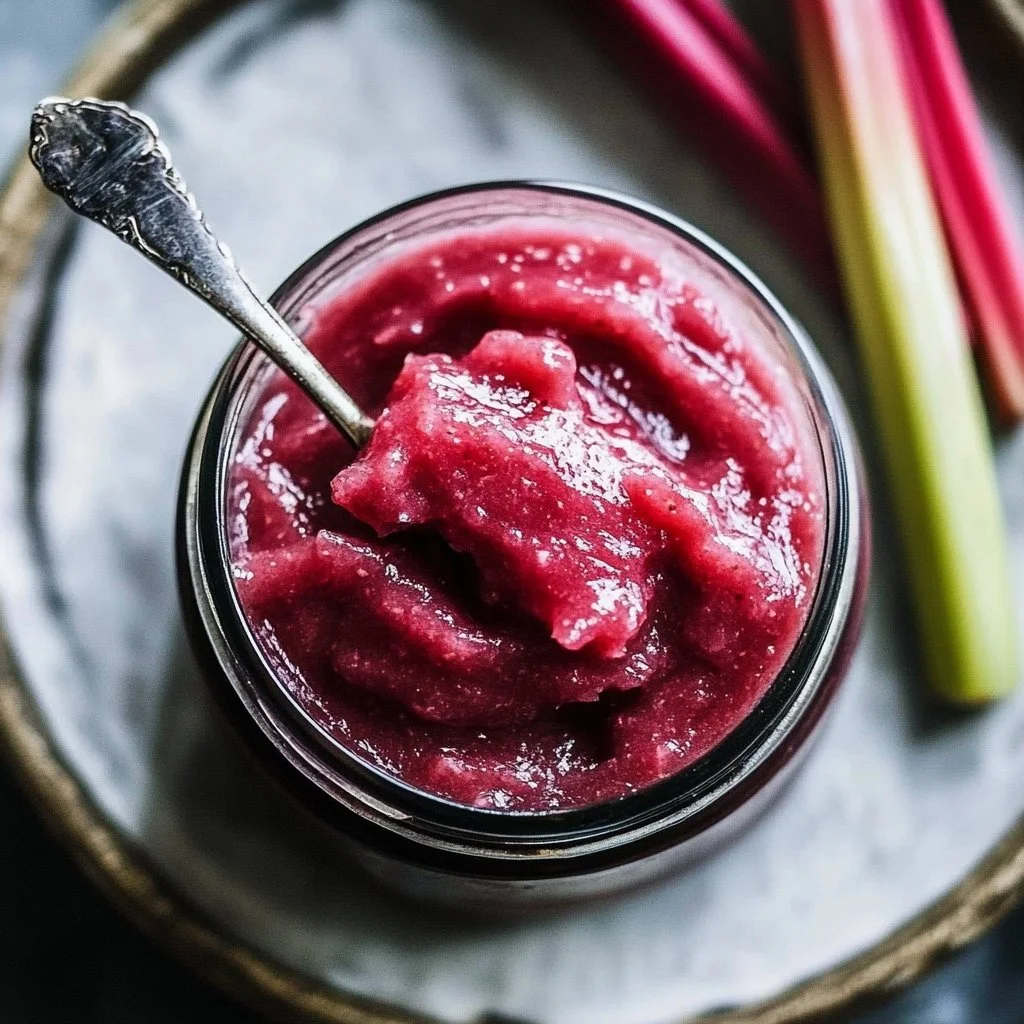
Spread it on warm toast with cream cheese for a simple breakfast. Use it as a filling for tarts, thumbprint cookies, or turnovers. Swirl a spoonful into plain yogurt or oatmeal for a bright pop of flavor. It’s also lovely dolloped on pancakes or scones, and you can spread it between cake layers for an acidic contrast to richer frostings. For a baked twist, try spreading a thin layer on a loaf before adding nuts and baking, similar to how one might use a brown butter chocolate chip banana bread topping in quick breads.
Storage and reheating tips
Refrigerate rhubarb butter in an airtight container for up to two weeks. For longer storage, freeze in freezer-safe jars or containers leaving at least 1/2 inch headspace; it will keep well for up to six months. Thaw overnight in the fridge before using. If you prefer a shelf-stable product, follow tested water-bath canning guidelines for fruit spreads and use proper sterilized jars and lids; if you’re unsure, refrigerate or freeze instead. Always cool the butter before sealing jars to avoid pressure build-up. Discard any jars that show signs of spoilage such as off smells or mold.
Helpful cooking tips
- Use evenly chopped stalks for consistent cooking.
- Start with less sugar if your rhubarb is sweeter, and adjust after tasting once it’s cooked down.
- Cook gently. High heat makes the fruit stick and risks burning the sugars.
- An immersion blender means less mess and safer handling when blending hot fruit. Cool slightly before blending to avoid steam splatters.
- If you want a glossy finish, stir in a teaspoon of unsalted butter off heat just before jarring.
- For quick checks of texture, dollop a teaspoon on a chilled plate; the colder surface helps you judge the set.
Creative twists
- Strawberry-rhubarb: Add equal parts hulled strawberries for a classic pairing.
- Ginger-laced: Stir in a teaspoon of grated fresh ginger while cooking for warmth.
- Citrus boost: Add orange zest or swap half the lemon for lime for a brighter profile.
- Spiced: Add a pinch of ground cardamom or cinnamon for a cozy accent.
- Low-sugar option: Use apple sauce as part of the sweetener to reduce added sugar, but expect a looser texture.
Your questions answered
How long does this take from start to finish?
Active hands-on time is about 10 minutes for prep and 15 to 25 minutes simmering, so plan for roughly 30 to 40 minutes total including blending and cooling.
Can I use frozen rhubarb?
Yes. Thaw and drain excess liquid, then cook the fruit and sugar together. Frozen rhubarb is usually softer so it may break down faster and need less simmer time.
How sweet should the butter be?
That depends on taste and the tartness of your rhubarb. Start with 1/2 cup sugar per pound of rhubarb, taste after cooking, and add up to 3/4 cup if you prefer sweeter spreads. Remember that chilling mellows the perceived sweetness slightly.
Is rhubarb safe to eat?
Yes, the stalks are edible and safe. Do not eat the leaves; they contain toxic compounds. Trim and discard leaves carefully before cooking.
Can I can this for pantry storage?
You can, but only if you follow proper water-bath canning procedures with sterilized jars and tested recipes to ensure safety. If you’re unfamiliar with canning, refrigerating or freezing is the safer, simpler option.
PrintSimple Rhubarb Butter
A tart and sweet spread made from fresh rhubarb, perfect for toasts and pastries.
- Prep Time: 10 minutes
- Cook Time: 25 minutes
- Total Time: 35 minutes
- Yield: 2 cups 1x
- Category: Condiment
- Method: Simmering
- Cuisine: American
- Diet: Vegetarian
Ingredients
- 1 pound fresh rhubarb, trimmed and chopped into 1/2-inch pieces
- 1/2 to 3/4 cup granulated sugar
- 1 to 2 tablespoons fresh lemon juice
Instructions
- Wash and trim the rhubarb. Chop into even pieces so it cooks uniformly.
- Combine the rhubarb, sugar, and lemon juice in a medium saucepan over low to medium heat. Stir to coat the fruit in sugar.
- Bring to a gentle simmer. Cook uncovered, stirring every few minutes to prevent sticking, until the rhubarb has collapsed and the liquid has reduced, about 15 to 25 minutes.
- Test for thickness by spooning a small amount onto a chilled plate; it should hold together and not run. If it’s still watery, simmer a few minutes longer.
- Remove from the heat and let the mixture cool slightly. Use an immersion blender or transfer to a countertop blender. Purée until completely smooth and silky.
- Spoon the warm rhubarb butter into clean jars. Let cool to room temperature, then refrigerate.
Notes
For a thinner spread, reduce cooking time slightly; for a thicker butter, simmer until more water has cooked off. If using frozen rhubarb, thaw and drain excess liquid before cooking.
Nutrition
- Serving Size: 2 tablespoons
- Calories: 80
- Sugar: 18g
- Sodium: 0mg
- Fat: 0g
- Saturated Fat: 0g
- Unsaturated Fat: 0g
- Trans Fat: 0g
- Carbohydrates: 21g
- Fiber: 1g
- Protein: 0g
- Cholesterol: 0mg